
How to Build a Predictable Revenue Engine for Your Business
Revenue feels random in a lot of companies. One quarter looks strong, the next quarter slips, and leaders spend weeks trying to explain the gap. In most cases, the problem is not effort. It is design. Predictable growth comes from a revenue engine with clear inputs, clean handoffs, tight process, and steady follow-through across the full customer lifecycle. Teams that win keep refining how buyers move from first touch to closed deal to renewal, instead of hoping a few big opportunities save the month.
That is one reason many companies work with B2B lead generation firms when they want faster pipeline growth. Still, lead volume alone will not create reliable revenue. A real engine needs stronger economics, sharper qualification, better data, disciplined forecasting, and a post-sale motion that protects renewals and creates expansion. Revenue becomes easier to forecast when the business treats acquisition, conversion, retention, and operations as one connected system.
Start With a Revenue Model That Makes Sense

A predictable engine starts long before the first campaign or cold call. It starts with a clear answer to four basic questions: who you serve, what problem you solve, how much a customer is worth, and how fast that customer reaches value. If those answers stay fuzzy, the rest of the funnel turns noisy fast. Your pricing, sales motion, staffing plan, and customer success model all sit on top of that foundation. Companies that rely on recurring revenue usually gain better visibility than firms that depend only on one-time deals, and recent Salesforce research shows recurring sales remain the top revenue source for many sales leaders.
From there, segment your go-to-market motion by account type. Small accounts may buy through self-serve or a light inside-sales process. Mid-market deals often need a guided sales motion. Enterprise accounts usually need tailored discovery, multiple stakeholders, and a longer cycle. McKinsey’s B2B Pulse research shows buyers want a stronger mix of self-service and human interaction, which means your revenue model has to match how your customers prefer to buy, not how your team prefers to sell.
Build Demand Through Focused Acquisition Channels
A predictable engine does not try to win everywhere at once. It picks a small set of acquisition channels that fit the ideal customer profile and then builds consistent execution inside those channels. For one company, that may be content plus SEO plus outbound email. For another, it may be partner referrals, events, and account-based outreach. The right mix depends on deal size, sales cycle, buyer behavior, and internal skill. McKinsey reports that leading B2B companies keep investing in omnichannel sales because buyers now expect a more sophisticated buying experience across digital and human touchpoints.
Each channel should play a specific role in the engine. Content can build trust and capture demand already in the market. Outbound can create pipelines in named accounts. Partners can open doors faster than a brand-new sales rep can. Referrals often convert well because trust is already present. Salesforce has reported that more than 90% of sales teams use more than one revenue source, and partner selling is gaining influence, which supports a channel strategy built on mix and balance rather than a single source of pipeline.
The mistake to avoid is chasing vanity numbers. Traffic, impressions, and form fills can look healthy while revenue stays flat. Track source-to-opportunity rate, source-to-revenue rate, sales cycle by source, average deal size by source, and payback by source. A channel deserves more budget only after it proves it can create a pipeline that closes at a healthy margin. That mindset keeps marketing spend grounded in commercial reality instead of wishful reporting.
Turn Interest Into Qualified Pipeline
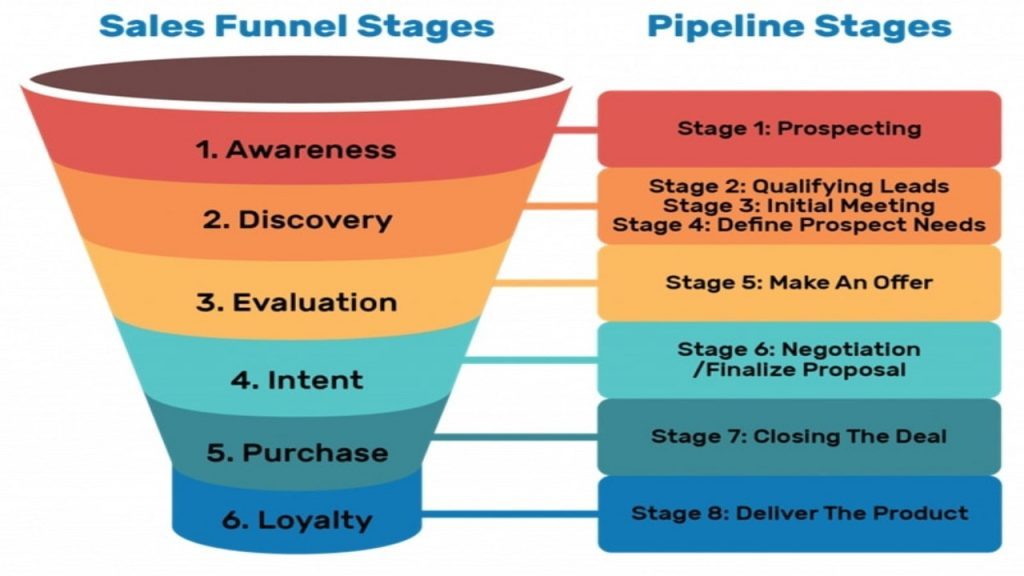
Most revenue engines do not break at lead generation. They break in the handoff between inquiry and real opportunity. A prospect fills out a form, replies to an ad, or asks for a demo, then sits in a queue too long. Harvard Business Review noted years ago that many companies respond to online sales leads far too slowly, and that basic issue still hurts conversion today. Fast follow-up is one of the simplest ways to improve pipeline quality without raising spend.
Qualification needs structure as well. Sales development and account executives should work from the same definition of a good opportunity. That includes fit, pain, urgency, decision process, likely budget range, and next step. Every qualified opportunity should enter the CRM with required fields completed, a defined stage, and a clear owner. Salesforce reports that unified data is central to meeting customer expectations, while data silos and inaccessible information still hold teams back. Clean qualification data makes forecasting sharper and sales coaching easier.
Your pipeline stages need exit criteria, not vague labels. “Discovery complete” should mean the same thing across the team. “Proposal sent” should signal pricing, scope, buying process, and timeline are already clear. HubSpot notes that forecasting improves when teams look closely at deal stage, time spent in stage, and close likelihood. Once stages become measurable, leaders can spot bottlenecks early instead of debating opinions at the end of the quarter.
Create a Sales Process That Forecasts Accurately
A predictable revenue engine depends on a sales process that reduces surprises. That means strong discovery, written next steps after each meeting, a mutual action plan for larger deals, and disciplined follow-up tied to the buyer’s timeline. This matters even more now because Salesforce reports that 57% of sales professionals say sales cycles are getting longer, while 73% of B2B buyers actively avoid sellers who send irrelevant outreach. Sloppy follow-up creates drag. Relevant follow-up creates momentum.
Sales enablement plays a bigger role here than many leaders admit. The best process in the world fails if reps lack the talk tracks, proof points, objection handling, pricing guidance, and coaching required to execute it well. Salesforce has identified enablement and training as a top growth tactic, and the company’s newer data shows reps still spend a huge share of their time on non-selling work. When admin, approvals, and content hunting eat the day, forecast quality drops because reps spend less time moving deals forward.
Forecasting gets stronger when leaders separate pipelines into realistic categories and inspect the assumptions inside each one. Commit deals should have confirmed business pain, an active buying process, and a documented close plan. Best-case deals need a path to close, not vague optimism. Upside should stay visible without being treated as booked revenue. HubSpot’s pipeline guidance makes the core point well: stage position, deal age, and close probability create real visibility when teams use them with discipline.
Retain and Expand Customers After the First Sale

If your engine stops at closed-won, it is incomplete. Predictable businesses build revenue after the first contract through onboarding, adoption, renewal planning, cross-sell, and upsell. That is one reason recurring sales matter so much. Salesforce research shows recurring revenue is a leading revenue source, with upsells and cross-sells close behind. Strong post-sale execution turns one booking into a stream of future revenue instead of a one-time event.
This is where net revenue retention becomes one of the clearest health signals in the company. McKinsey defines NRR as retained and expanded revenue from the existing customer base, calculated through cross-sell plus upsell minus churn. The same analysis found top-quartile B2B SaaS companies reached 113% NRR, while bottom-quartile peers reached 98%. That gap shows how much value sits inside the installed base when onboarding, adoption, pricing, expansion, and renewal work together.
Customer success teams need a real commercial operating model, not a vague service charter. Health scores should reflect product usage, support trends, sponsor engagement, contract timing, and realized value. Expansion triggers should be defined in advance. Renewal plans should start months before the date on the invoice. When those habits become routine, revenue becomes steadier because churn risk appears earlier and account growth becomes intentional instead of accidental. Salesforce’s 2026 State of Sales report points to retention as one of the areas where sales teams already see benefits from better systems and AI support.
Run the Engine With Weekly Revenue Operations Discipline
Revenue operations is the layer that turns separate activities into one reliable machine. RevOps creates shared definitions, standardized reporting, clear handoffs, territory logic, compensation guardrails, and one version of the truth across marketing, sales, and customer success. This is not back-office housekeeping. It is revenue infrastructure. Salesforce reports that inaccessible data, fragmented tools, and poor data hygiene still slow sales teams down, which is why stronger operational discipline has become a growth lever rather than an admin function.
The weekly operating cadence should stay simple. Review new pipeline created, conversion rates by stage, average deal age, forecast gap versus target, churn risk, renewals due, and expansion opportunities opened. Then decide what action changes the number next week. Monthly, zoom out and review channel efficiency, win-loss patterns, pricing pressure, sales capacity, and retention trends. A revenue engine becomes predictable when the team learns fast, fixes leaks early, and keeps the whole system moving in one direction. That kind of consistency is usually less dramatic than a heroic quarter-end push, though it is far more valuable over time.